

In these testing times, it is inspiring to see how communities, networks, charities, healthcare professionals, researchers and the public as whole have come together, to collaborate, share information and knowledge, and all work together for the benefit of public health.
Here at CLUSTER we are very lucky to have leading experts in the field of paediatric rheumatology, along with amazing charity leads, network representatives, parents and young people representatives, as part of our CLUSTER Champions, who have come together to help develop materials and advice for patients.
Collectively, they have been involved in the development of a paediatric version of the risk stratification advice on social distancing and shielding for children and teenage rheumatology patients as well as a document to answer FAQs for families. They have also helped in the development of a longitudinal research project – The European Patient Registry as partners of the Global Rheumatology Alliance. These and other rapid response initiatives have been outlined below.
Developing Information for Paediatric Rheumatology Families during Coronavirus:
Parents and families of children with chronic illness can feel at sea with navigating how best to keep their children and young people safe. The benefit of working collaboratively with so many parties meant that we were able to react quickly and develop two important tools for parents and families. The first of these, which was built to align with National guidance (led by the British Society of Rheumatology, BSR) was a useful flowchart to help parents and families understand the risk level to their child/young person during the Coronavirus outbreak and to help them assess the care that their child/young person might need.
The flow chart (algorithm) tool was worked on in partnership between senior clinical and academic colleagues in partnership with CCAA other patient stakeholders and charities. The resulting flow chart (algorithm) follows a Yes/No pattern, ultimately placing each child/young person into one of three risk classifications:
- High risk – advised to follow government’s SHIELDING recommendations.
- Moderate risk – advised to follow STRICT SOCIAL DISTANCING guidelines.
- Low risk – advised to follow SOCIAL DISTANCING guidelines.
These different levels of risk were defined by using information about factors such as, whether a child /young person has been taking steroid treatment, if they have had a recent flare of disease, if they have any other medical conditions, and what type of medication they are currently taking. These guidelines were based on best available data at the time, so may be updated as things change.
The second tool a set of FAQs around all aspects of life with Coronavirus including answers to questions such as ‘What do you know about COVID-19 in children and young people with rheumatic disease?’ and‘I am frightened about taking my child/young person into hospital for an appointment – will it be safe?’ This document had contributions from clinicians, researchers, patients and parents and used national guidance where appropriate, until consensus was reached. Both resources have been very well received by parents and families and have helped alleviate pressure on helplines and call centres. Again we have seen the value of networks such as the Cluster consortium to disseminate information quickly to where it is needed.
For more information, and to see both the tools for parents and families, please follow the link to the CCAA website: https://www.ccaa.org.uk/coronavirus-support-resources/
JAR – The European Patient Registry, part of the Global Rheumatology Alliance:
As part of the Global Rheumatology Alliance, Juvenile Arthritis Research (JAR Project) headed-up by CLUSTER Champion Richard Beesley, in collaboration with ENCA, PReS and in liaison with PRINTO and BSR have worked together, with multiple CLUSTER investigators, including PI Prof. Kimme Hyrich, to develop this patient registry.
JAR Project is a charity that conducts research into juvenile idiopathic arthritis, raises awareness that children and young people can develop arthritis and provides support to children and families at the point of diagnosis (www.jarproject.org).
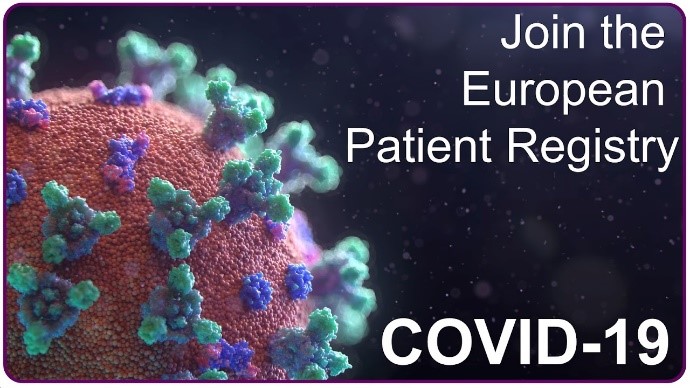
The patient registry is a longitudinal study consisting of a short initial questionnaire in which participants are asked about their rheumatic or autoimmune condition, their regular medication and drugs, and any additional conditions. Participants are also asked if they have had any symptoms related to COVID-19, or if they have been diagnosed with COVID-19, and their management of it.
Short, weekly follow-up questionnaires are then sent to the participants to develop strong longitudinal data.
The registry also welcomes people without a rheumatic or autoimmune diagnosis to take part, including siblings of patients, spouses of adult patients, and any individual who is keen on taking part in research, whether they are affected by a rheumatic condition or not. This will help produce essential data to act as a ‘healthy’ control and allow researchers to identify differences and to see if COVID-19 affects people with rheumatic conditions differently.
All the information for the study, and links to sign-up to the questionnaires can be found on the JAR Project website – www.jarproject.org/covid
The questionnaires are also available in other languages, with new translations regularly being added.
Thank You
CLUSTER, would like to thank everyone who has helped contribute their time and content on these COVID focused tasks, and to all members of the community who have provided their advice.
The European Patient Registry
Richard Beesley, Juvenile Arthritis Research (www.jarproject.org)
European Network for Children with Arthritis, ENCA (www.enca.org)
Wendy Costello, Chair of ENCA, and iCAN Ireland (https://icanireland.ie/)
Paediatric Rheumatology European Association, PReS (https://www.pres.eu/)
Recent Comments