

Scientific research in an accessible format
On this page you can find summaries or graphic visual representations of CLUSTERs research findings.
CLUSTER combines expertise in clinical, molecular, genetic, immunological and statistical sciences, with UK leaders in paediatric rheumatology and ophthalmology, as well as those designing and delivering clinical trials in JIA and its associated uveitis.
The overall goal of CLUSTER is to define ‘endotypes’ (subgroups based on underlying disease mechanism) of childhood arthritis and JIA-uveitis. This would more accurately reflect the likely treatment response and disease course, linked to biomarkers that are feasible to measure in children, to allow targeted treatment decisions.
Innovative Findings in JIA Research
Discover the latest findings from research on Juvenile Idiopathic Arthritis (JIA) and Uveitis by expert researchers from the CLUSTER Consortium. This webinar was co-produced with our patient partners, the CLUSTER Champions, to share CLUSTER’s research with patients, families and the wider public (first broadcast on 16th October 2024.).
Drug Development Infographic
The CLUSTER Champions worked with the CLUSTER Industry Committee and CLUSTER Researchers to develop an infographic which describes the journey of drug development. We hope that this will be helpful to anyone interested in the process, and potential challenges, involved in the development of a new medicine or therapy.

CLUSTER Research Papers
Here you can find research papers from the CLUSTER consortium.
Click on the title of the paper to find out more:
Altered B cell activation contributes to the immunopathogenesis of childhood arthritis-associated uveitis (2026)
Jebson, B. R., Ingledow, B., Alexiou, V., Kubiak, J., Jenkins, P., Meng, Y., Kartawinata, M., Restuadi, R., Lin, W. Y., Wallace, C., Chu, C. J., Solebo, A. L., Wedderburn, L. R., Rosser, E. C., & CLUSTER consortium
What is this research about?
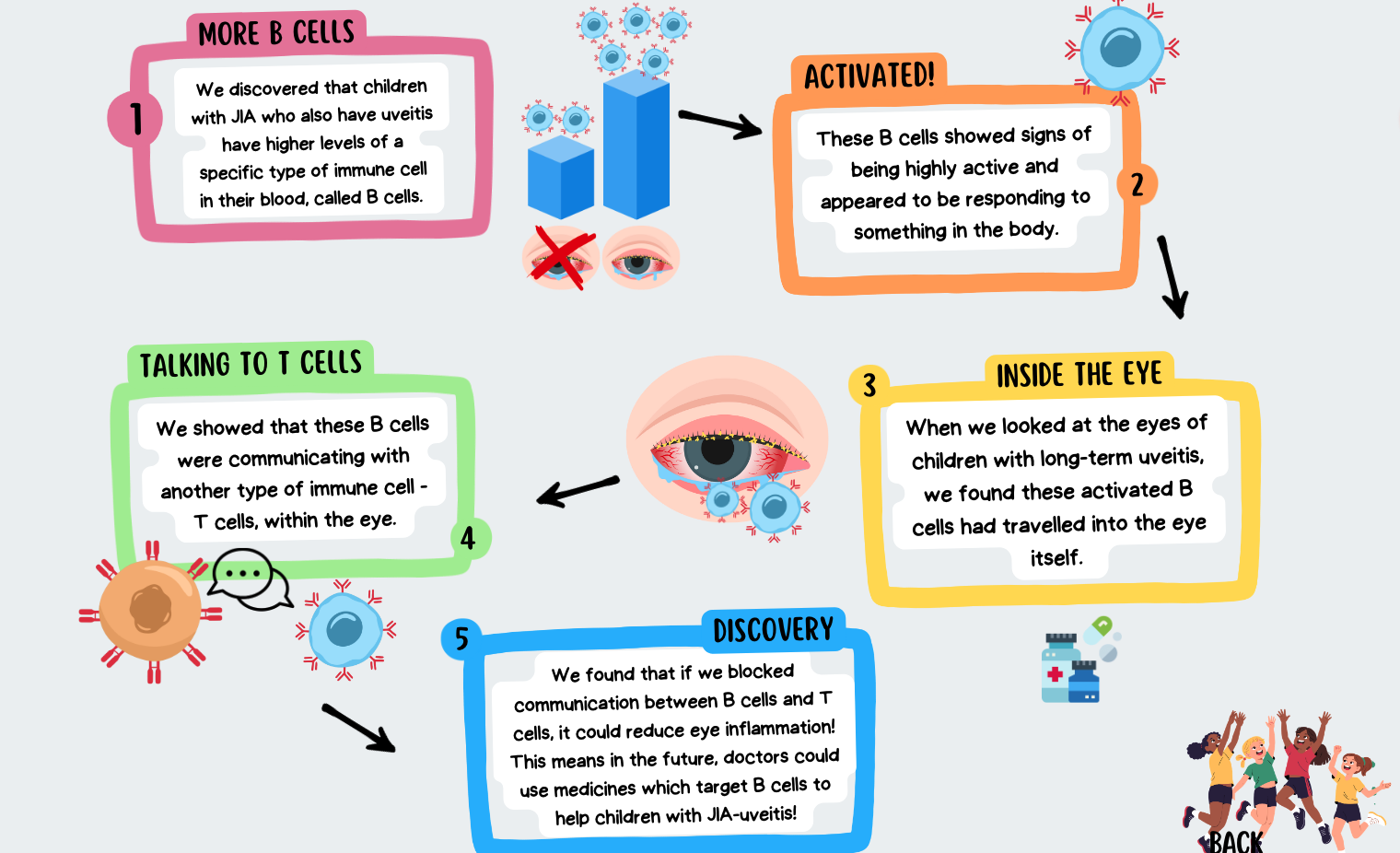
Juvenile Idiopathic Arthritis (JIA) is a type of arthritis that affects children. Many children with JIA arthritis also develop a serious eye condition called uveitis. Uveitis is inflammation inside the eye that can lead to permanent vision loss if not treated. Until now, scientists haven’t fully understood why some children with JIA develop eye problems while others don’t.
What did we find?
We discovered that children with JIA who also have uveitis have higher levels of a specific type of immune cell in their blood, called B cells. These B cells showed signs of being highly active and appeared to be responding to something in the body. When we looked at the eyes of children with long-term uveitis, we found these activated B cells had travelled into the eye itself. We also confirmed these findings in laboratory models, where we showed that blocking the communication between B cells and another type of immune cell (T cells) could reduce eye inflammation.
Why does this matter?
Doctors have traditionally thought of uveitis as a disease mainly driven by T cells. Our research suggests that B cells also play an important role. This is significant because it opens the door to new treatment approaches – therapies that target B cells, which are already used for other conditions, might help children with JIA-uveitis whose eye inflammation doesn’t respond well to current treatments.
Credits to Dr Hannah Peckham for producing the infographic.

Identification and validation of interferon-driven gene signature as a predictor of response to methotrexate in juvenile idiopathic arthritis (2025)
Kartawinata, M., Lin, W.-Y., Jebson, B., O’Brien, K., Ralph, E., Welsh, E., Restuadi, R., Rosser, E. C., Deakin, C. T., Wedderburn, L. R., Wallace, C., & CLUSTER Consortium.
Certain genes in the blood of children with juvenile idiopathic arthritis (JIA) could help predict how well they would respond to methotrexate (MTX), a common treatment. Before starting MTX, blood samples were taken from a cohort of children and analyzed for patterns in gene activity.
The team found that higher activity of a specific group of immune-related genes, called interferon-stimulated genes, was linked to better treatment outcomes six months later. These findings were confirmed in two additional groups of children with JIA. When the same type of analysis was done in adults with rheumatoid arthritis, the results were not the same, suggesting differences between children and adults in how gene activity predicts treatment response.
This research could lead to future tools that could help doctors tailor a specific treatment plan earlier for each child.
Synovial tissue atlas in juvenile idiopathic arthritis reveals pathogenic niches associated with disease severity (2025)
Bolton, C., Mahony, C. B., Clay, E., Nisa, P. R., Lomholt, S., Hackland, A., Chin, P. S., Smith, C. G., Alexiou, V., Nguyen, H. D., Thyagarajan, M., Sheikh, Z., Davis, P., Chippington, S., Compeyrot-Lacassagne, S., Davda, S., Foley, C., Turtsevich, I., Ingledow, B., Kupiec, K., Kelly, J., Hanlon, M. M., DiCarlo, E., Jones, L. J., Smith, S. L., Eyre, S., Neag, G., Kemble, S., Madhu, R., Palshikar, M. G., Korsunsky, I., Gao, C., Tran, M., Dendrou, C., Buckley, C. D., Coles, M. C., Raza, K., the MAPJAG Study Group, Gravellese, E., Filer, A., Wei, K., Al-Abadi, E., Rosser, E. C., Wedderburn L. R., Croft, A. P., and the Multiomic Analysis of Paediatric Joint and Gut inflammation (MAPJAG) study group
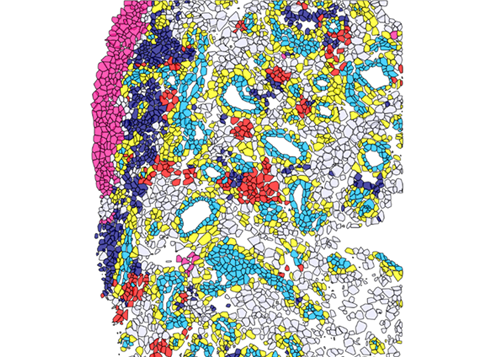
Until this study, researchers had only examined blood samples and fluid from the joints of children with juvenile idiopathic arthritis (JIA). In this study, to better understand how JIA affects joints at the cell level, the team studied tissue samples from 19 children when they were diagnosed with arthritis, before they began treatment. Researchers took tiny samples of tissue from the inflamed joint lining, fluid from the joint, and blood to compare the cells found in each place. Using advanced tools that analyse individual cells, for the first time the team made a detailed map of the many cell types present in inflamed joints of children. They found that the joint tissue had a unique mix of cells not seen in the blood or joint fluid. The joint tissue also had structural cells (called fibroblasts) and blood vessels, as well as key immune cells. These were far more common in the inflamed tissue but absent in healthy joint samples. Some of these cells play a leading part in driving inflammation and the researchers found that they were linked to genes associated with worse arthritis symptoms.
Younger children had more of a specialised immune cell known as plasma cells, while older children showed a different mix of immune cells—suggesting that treatment strategies might need to be carefully designed according to the child’s age at diagnosis. To better understand how all these different cells interact within inflamed joints, the researchers used cutting-edge ‘spatial mapping’ methods – these allow them to see exactly where different cell types are located and how they talk to each other. They discovered that the joint is organized into several distinct “neighbourhoods”, each with a unique combination of cells and signalling activity. Higher numbers of certain neighbourhoods was linked to more severe inflammation.
Interestingly, for the first time, the researchers identified that some disease-driving cells were shared with adult-onset arthritis but also found key differences in children’s joints compared to adults—such as blood vessel patterns and immune responses. These findings show that childhood arthritis is not simply a smaller version of adult arthritis – it is its own distinct disease. Therefore, age-specific research is essential to develop more individual treatments for children with arthritis.

The immune landscape of the inflamed joint defined by spectral flow cytometry (2024)
Meryl H Attrill, Diana Shinko, Vicky Alexiou, Melissa Kartawinata, CHARMS study, JIAP study, Lucy R Wedderburn, Anne M Pesenacker
Juvenile Idiopathic Arthritis (JIA) is an autoimmune condition starting during childhood affecting the joints. The immune system is made up of many different cells, working together to fight off infections and prevent illness. When immune cells attack the body’s own cells instead, it can lead to autoimmune conditions. Accumulation of immune cells and fluid during inflammation in JIA can lead to children and young people experiencing painful swollen joints. This can also lead to damaged tissues.
This research was able to find specific characteristics of the cells from the inflamed joint, which were not circulating in the blood, of children and young people living with JIA. Biological parts of the cells such as proteins can change how the cell works, and communicates with its neighbour, as well as when to recognise danger and switch on “attack” signals. Through advanced technology, called spectral flow cytometry, we looked at many more proteins than previously explored and found specific cell profiles (also known as phenotypes) which could cause damage in the joint by the proteins they express.
This research suggests potential new targets to guide future drug development. Ultimately, we hope this may help to stop the inflammation in the joint, without the side effects of current therapies that can alter the whole body.
Link to paper here

Integration of genetic and clinical risk factors improves the risk classification of uveitis in patients with juvenile idiopathic arthritis (2024)
Melissa Tordoff , Samantha L Smith, Saskia Lawson-Tovey; UK JIA Biologics Register, CAPS, CHARMS, CLUSTER, JIAGC; Andrew D Dick , Michael W Beresford , Athimalaipet V Ramanan, Kimme L Hyrich, Andrew P Morris, Stephen Eyre, Lucy R Wedderburn, John Bowes; CLUSTER consortium
Aims of research
To find changes in people’s DNA that lead to an increased risk of developing an inflammatory eye condition called uveitis. These changes in the DNA were then combined with clinical information to create a statistical test to help classify people with increased risk.
Background of research
Children and young people with juvenile idiopathic arthritis (JIA) are at a higher risk of developing uveitis. It is important to identify those at higher risk early. Several clinical factors, such as sex and the age at which JIA begins, have been associated with an increased risk of uveitis. Additionally, certain genetic variants in a specific part of the genome known as the human leukocyte antigen (HLA) region are also linked to this increased risk. However, until now, these factors have not been combined into a single test to identify those at high risk.
Design/methods – how this research was carried out?
We compared genetic variants between 579 JIA patients with uveitis and 2,479 patients without uveitis. We identified three genetic variants associated with an increased risk of developing uveitis. When these genetic factors were combined with clinical information, the ability to identify individuals at higher risk improved.
Conclusions
This research could lead to the development of a screening tool for uveitis in children and young people with JIA, potentially enabling earlier identification and intervention
Click the link below for the full paper:

How can trial designs better serve the needs of children and young people with juvenile idiopathic arthritis? (2024)
Freya Luling Feilding, Laura Crosby, Emily Earle, Richard Beesley, Kerry Leslie, Eilean MacDonald, Catherine Wright, Debbie Wilson, Anna Sherriffs, Teresa Duerr, Athimalaipet V Ramanan; CLUSTER Consortium
In juvenile idiopathic arthritis we have seen remarkable progress in the number of available licensed biological and small molecule treatments in the past two decades, leading to improved outcomes for patients. Designing clinical trials for these therapeutics is fraught with ethical, legislative, and practical challenges. However, many aspects of current clinical trial design in juvenile idiopathic arthritis do not meet the needs of patients and clinicians. Commonly used withdrawal trial designs raise substantial ethical concerns for patients and families who believe that they do not enable evidence-based and patient-centred decisions around medication choices. In this Viewpoint, we present the personal views of a patient and parent network that is of the opinion that current trial design in juvenile idiopathic arthritis is failing children and young people with juvenile idiopathic arthritis and set out the need for change informed by lived experience.
Click this link to find the full paper: How can trial designs better serve the needs of children and young people with juvenile idiopathic arthritis? – PubMed (nih.gov)
Excitingly this paper received editorial comment in Lancet Rheumatology (October 2024).
Towards stratified treatment of JIA: machine learning identifies subtypes in response to methotrexate from four UK cohorts (2024)
Stephanie J.W. Shoop-Worrall, Saskia Lawson-Tovey, Lucy R. Wedderburn, Kimme L. Hyrich, Nophar Geifman, CLUSTER Consortium
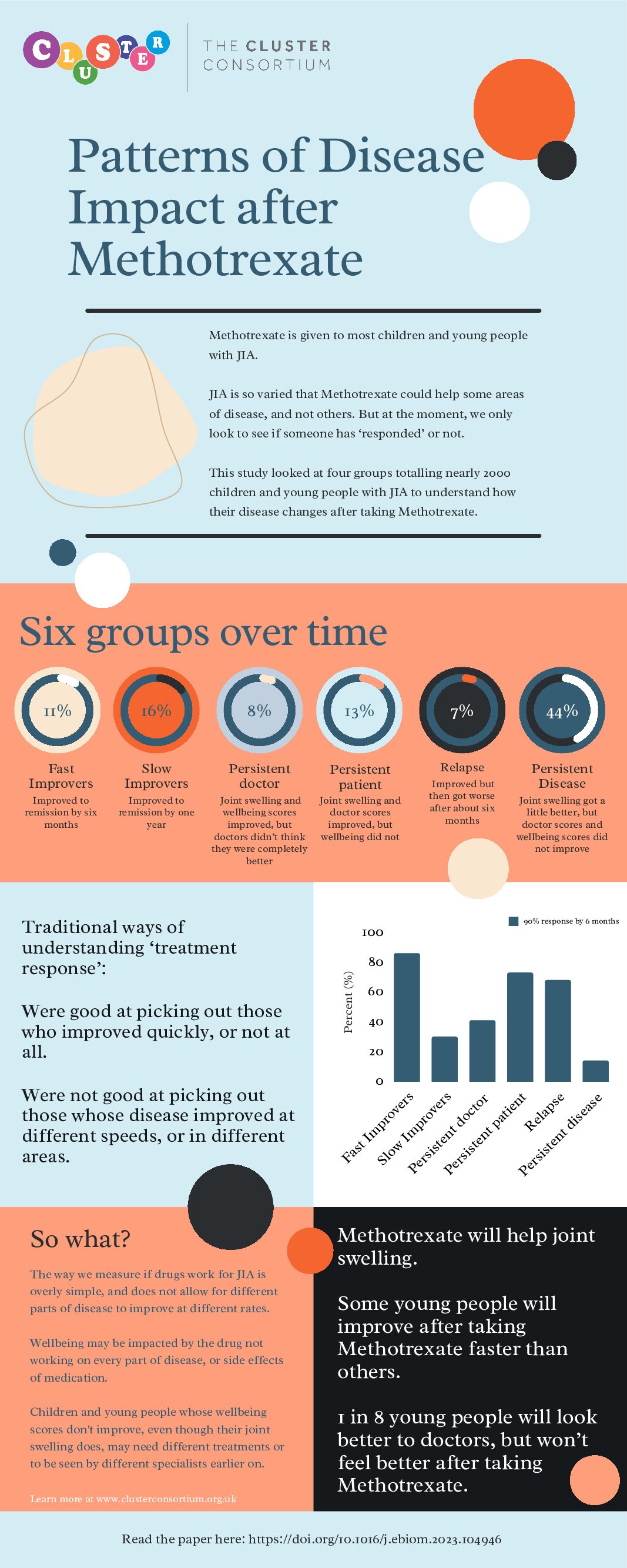
Methotrexate is given to most children and young people with JIA.
JIA is so varied that Methotrexate could help some areas of disease, and not others. But at the moment, we only look to see if someone has ‘responded’ or not. This study looked at four groups totalling nearly 2000 children and young people with JIA to understand how their disease changes after taking Methotrexate.
Traditional ways of understanding ‘treatment response’:
- Were good at picking out those who improved quickly, or not at all.
- Were not good at picking out those whose disease improved at different speeds, or in different areas.
So what?
The way we measure if drugs work for JIA is overly simple, and does not allow for different parts of disease to improve at different rates. Wellbeing may be impacted by the drug not working on every part of disease, or side effects of medication. Children and young people whose wellbeing scores don’t improve, even though their joint swelling does, may need different treatments or to be seen by different specialists earlier on.
Click this link to find the full paper: https://doi.org/10.1016/j.ebiom.2023.104946

Development and implementation of ‘A guide to PPIE – Early Integration into Research Proposals’ in a multi-disciplinary consortium (2023)
Richard Beesley, Freya Luling Feilding, CLUSTER Consortium Champions, Elizabeth C Rosser, Stephanie J W Shoop-Worrall, Alyssia McNeece, Zoe Wanstall, Kimme Hyrich, Lucy R Wedderburn, CLUSTER Consortium
We are delighted to share our first publication co-authored by our fabulous CLUSTER Champions published in Rheumatology.
The importance of Patient and Public Involvement and Engagement (PPIE) in the early phases of research design is significant and increasingly recognised throughout the research community. Here we describe the approach taken within the CLUSTER Consortium, setting out a stepwise process to support involvement at the earliest possible stage of project design, whilst acknowledging the real-world context of time pressures. This clearly defined strategic policy has ensured incorporation of PPIE into the early phases of research planning in CLUSTER and high-quality patient involvement has been demonstrated throughout the project. Ultimately this approach will strengthen research outcomes, maximising benefit for patients with JIA and JIA-Uveitis.
Read about the development of this policy and see the infographic in full here:https://www.clusterconsortium.org.uk/patients-and-parents/clusters-ppie-policy/
Read the full paper here: https://www.clusterconsortium.org.uk/wp-content/uploads/2023/10/CLUSTER-PPIE_Rheumatology_2023.pdf

The successes and challenges of harmonising juvenile idiopathic arthritis (JIA) datasets to create a large-scale JIA data resource (2023)
Saskia Lawson-Tovey, Samantha Louise Smith, Nophar Geifman, Stephanie Shoop-Worrall, Sandra Ng, Michael R. Barnes,
Lucy R. Wedderburn, Kimme L. Hyrich &
CLUSTER consortium
CLUSTER has recently published a paper talking about how we’ve brought together clinical data from 4 real-world JIA studies in the UK. This work was previously presented in the Best Oral Abstracts session at BSR 2022.
Data from more than 5400 JIA patients were sorted and pooled to create the final datasets, which contain 2899 patients on methotrexate and 2401 patients on TNF-inhibitors. These datasets are larger than most others in JIA – this is vital for progressing JIA research and the size of the datasets may allow for more in-depth big-data analyses, such as machine learning techniques.
Read the rest of this paper here: https://doi.org/10.1186/s12969-023-00839-2
If you stop biologic therapy for remission, are you likely to remain off treatment? (2023)
Lianne Kearsley-Fleet, Eileen Baildam, Michael W Beresford, Sharon Douglas, Helen E Foster, Taunton R Southwood, Kimme L Hyrich, Coziana Ciurtin
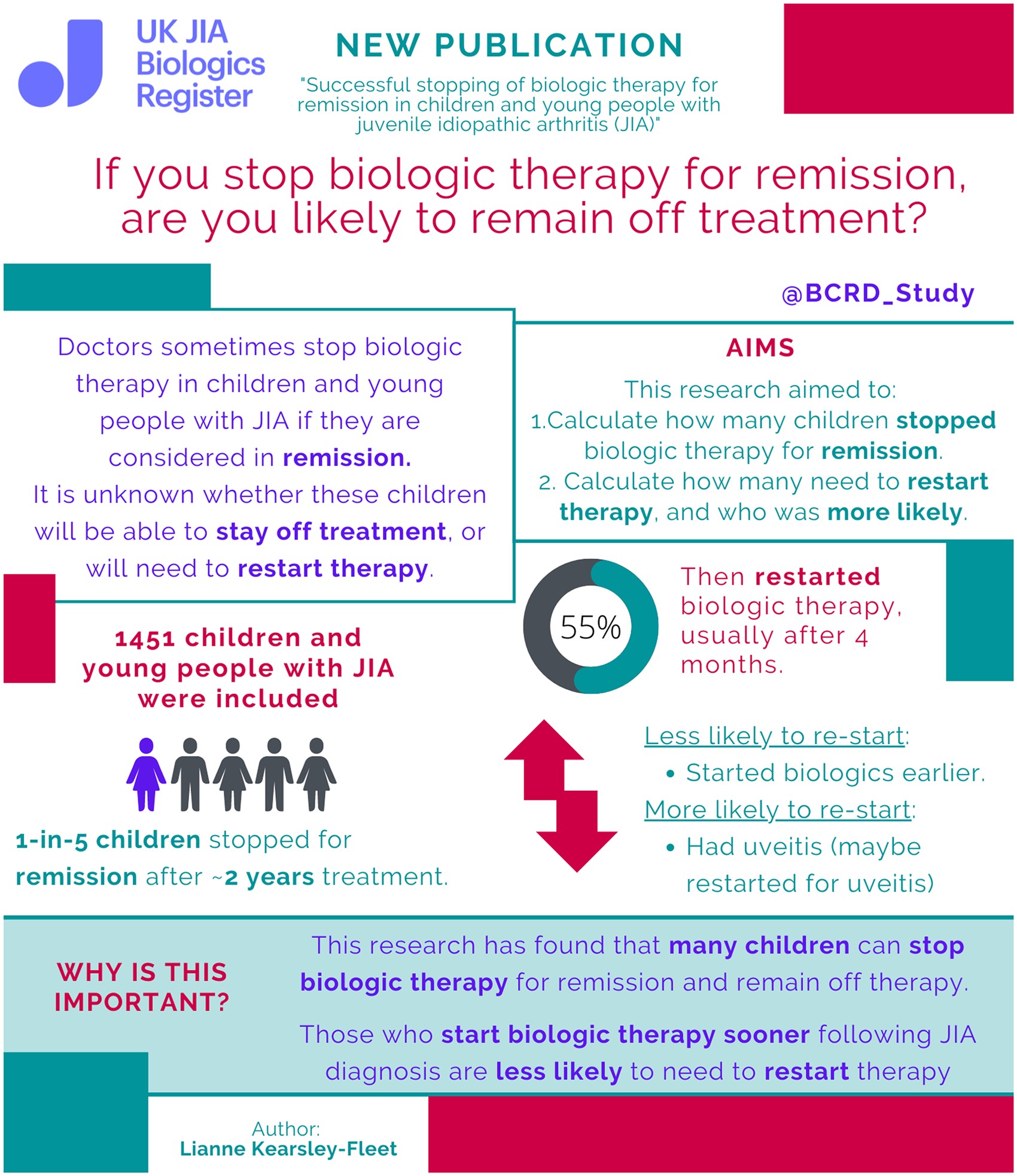
The infographic to the left describes this study and outlines the key results.
Why is this important?
This research has found that many children can stop biologic therapy for remission and remain off therapy.
Those who start biologic therapy sooner following JIA diagnosis are less likely to need to restart therapy.
Rheumatology (Oxford), Volume 62, Issue 5, May 2023, Pages 1926–1935, https://doi.org/10.1093/rheumatology/keac463
The content of this infographic may be subject to copyright.

Use of MRP8/14 in clinical practice as a predictor of outcome after methotrexate withdrawal in patients with juvenile idiopathic arthritis (2022)
Emma J. Sumner, Beverley Almeida, Jason Palman, Peter Bale, Clare Heard, Dirk Holzinger, Johannes Roth, Dirk Foell, Emily Robinson, Simona Ursu, Chris Wallace, Kimberly Gilmour, Lucy R. Wedderburn & Elizabeth Ralph
Methotrexate (MTX) is the most widely used medication for JIA and the first choice according to current treatment guidelines. Although many patients acheieve ‘disease remission’, meaning reduction or disappearance of the signs and symptoms of JIA, the definition of this outcome in patients remains challenging. This study aimed to look at the effectiveness of a particular molecule in blood, called MRP8/14, as a way of predicting disease flare (recurrance/worsening of signs and symptoms) after stopping MTX in a clinical setting.
Key points:
• First study of MRP8/14 measurement in clinical practice to inform treatment decisions in patients with JIA.
• No patients with a low MRP8/14 test result went on to suffer a disease flare in 12 months of follow follow-up.
• Further biomarkers are needed to predict the risk of flare off medication in JIA and treatment decisions.
Access the full scientific paper at:
https://link.springer.com/article/10.1007/s10067-022-06165-4
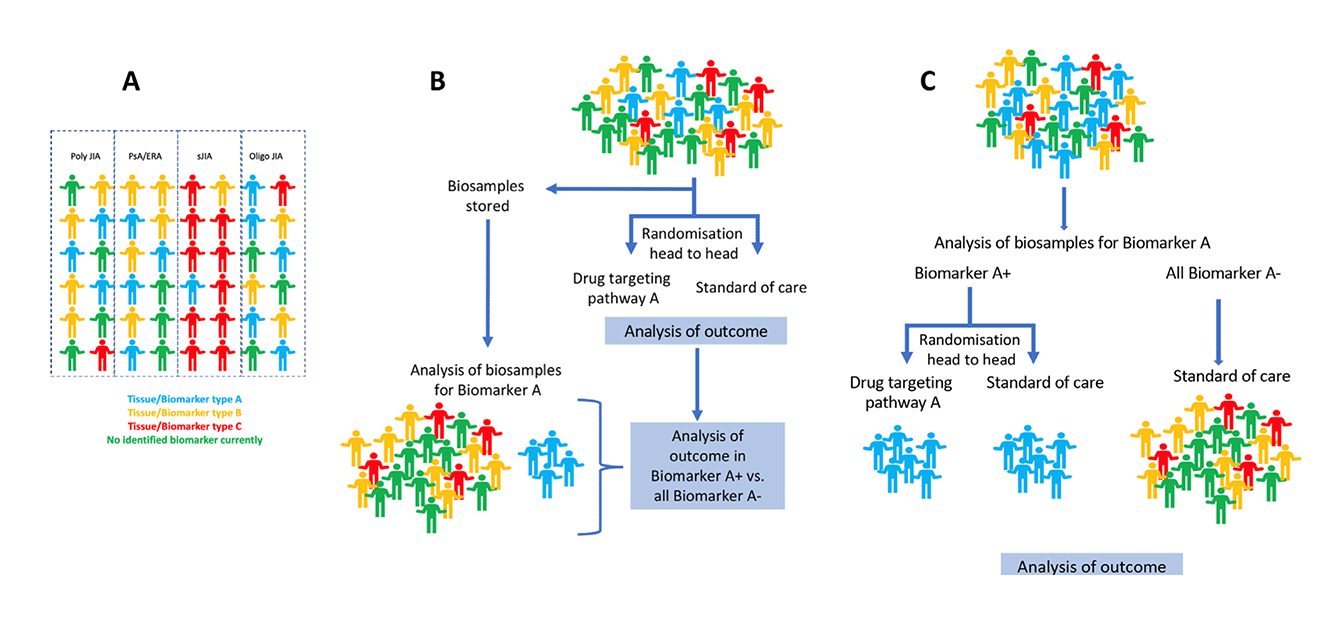
Towards 'precision medicine' in Juvenile Idiopathic Arthritis (JIA) (2022)
Lucy R Wedderburn, Athimalaipet V Ramanan, Adam P Croft, Kimme L Hyrich, Andrew Dick, On behalf of the CLUSTER Consortium
In childhood arthritis, also known as Juvenile idiopathic arthritis (JIA), many new types of medicines, called ‘biologics’, have become available in recent years. However, despite this, many children and young people continue to suffer with their arthritis for many years. More than half of young people with JIA need treatments into adult life and often must try many different types of medication in that time, essentially a trial-and-error approach. The current method of grouping children with JIA, known as the ILAR classification, is based largely on a child’s signs or symptoms in the clinic, for example how many joints are affected, does not help the clinical team decide which type of treatment will benefit that individual. In this review, we look at how new approaches to research, including using ‘biomarkers’, are paving the way towards ‘precision medicine’. This ultimately means getting the right treatment to the right patient at the right time.
Access the full scientific paper HERE
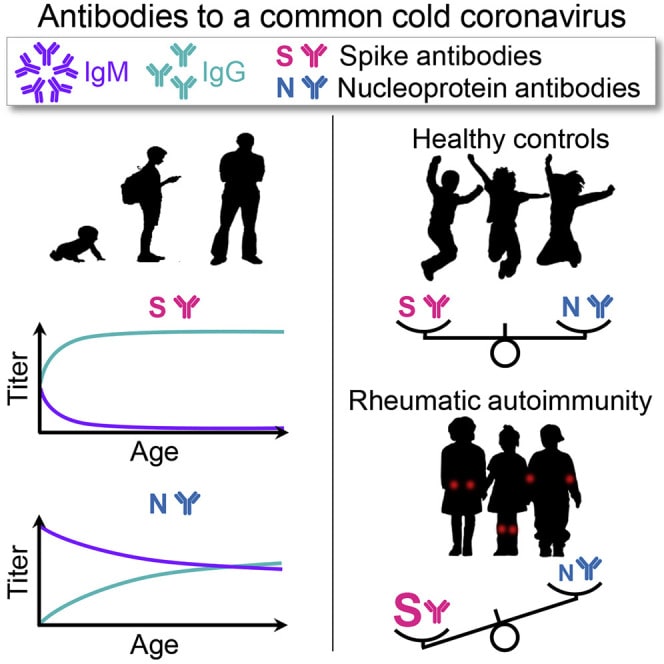
Favourable antibody responses to human coronaviruses in children and adolescents with autoimmune rheumatic diseases (2021)
Children and adolescents with rheumatic disease are considered to be at risk of COVID-19. However, data on the availability of such patients to fight COVID-19 are lacking. This is because infections are rare due to shielding or undetected due to lack of sever symptoms and limited mass testing.
Instead, the researchers investigated how well these patients defended themselves against a common-cold coronavirus, a relative of COVID-19, that frequently infects this age group. The researchers studied children and adolescents with arthritis, dermatomyositis, or lupus before the COVID-19 pandemic. They found that these inflammatory rheumatic diseases did not impede the antibody response to the common-cold corona virus, raising the possibility that the response to COVID-19 may also be unaffected.
Deakin, C.T., Cornish, G.H., Ng, K.W. et al., (2021) ‘Favorable antibody responses to human coronaviruses in children and adolescents with autoimmune rheumatic diseases’. Med (N Y). 2021 Sep 10;2(9):1093-1109.e6. doi: 10.1016/j.medj.2021.08.001
Access the full scientific paper: https://pubmed.ncbi.nlm.nih.gov/34414384/

Nothing about us without us: involving patient collaborators for machine learning applications in rheumatology (2021)
One of the aims of CLUSTER is to find groups of people with JIA with different treatment needs. To find these groups, we use new methods in ‘machine learning’. These ask a computer to uncover patterns that we didn’t know about before.
Two problems with ‘machine learning’ are:
- The computer could pick up patterns that aren’t useful in the clinic
- It might not look for patterns in parts of disease most important to people with JIA
Our solution was to involve young people with JIA in the research, so their priorities are heard, and their experiences can be used to pick out useful patterns.
Young people with arthritis aged 11 to 24 were involved through the group ‘Your Rheum’. We asked young people to draw their own disease journeys and then talk through, and vote on, the patterns found using ‘machine learning’.
After talking with the group, we decided on 6 patterns of JIA, which are described here. We also developed key instructions for involving young people in complicated research in the future.
The young people enjoyed drawing their own disease journeys and being with others who share their experiences. They found the workshop easier than expected, and suggested improvements for next time.
Your Rheum is open for more young people to join, please see https://yourrheum.org.
Shoop-Worrall SJW, Cresswell K, Bolger I, et al ‘Nothing about us without us: involving patient collaborators for machine learning applications in rheumatology’ Annals of the Rheumatic Diseases Published Online First: 05 July 2021. doi: 10.1136/annrheumdis-2021-220454
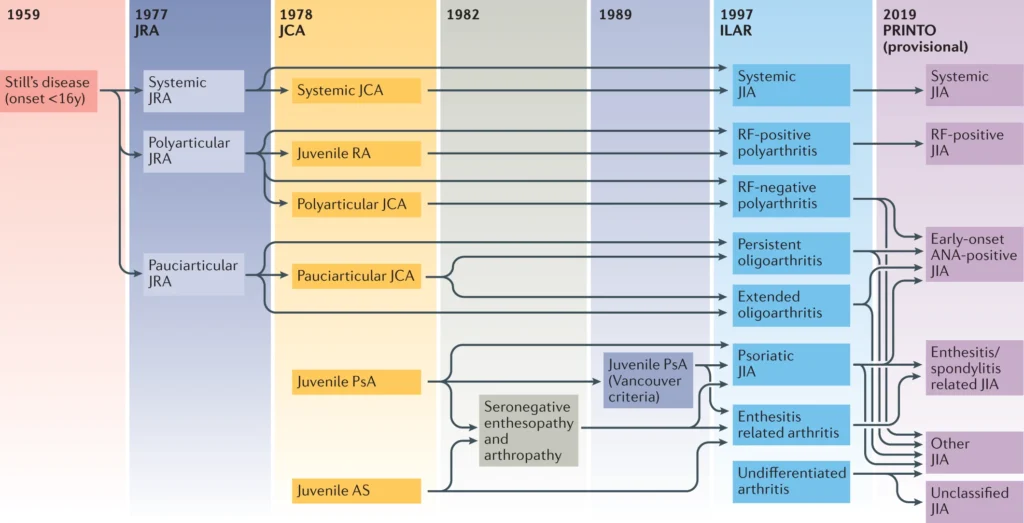
Biological classification of childhood arthritis: roadmap to a molecular nomenclature (2021)
Nigrovic, P.A., Colbert, R.A., Holers, V.M., Ozen, S., Ruperto, N., Thompson, S. D., Wedderburn L.R., Yeung, R. S. M., Martini, A. (2021)
Biological classification of childhood arthritis: roadmap to a molecular nomenclature
https://www.nature.com/articles/s41584-021-00590-6
Abstract:
Chronic inflammatory arthritis in childhood is heterogeneous in presentation and course. Most forms exhibit clinical and genetic similarity to arthritis of adult onset, although at least one phenotype might be restricted to children. Nevertheless, paediatric and adult rheumatologists have historically addressed disease classification separately, yielding a juvenile idiopathic arthritis (JIA) nomenclature that exhibits no terminological overlap with adult-onset arthritis. Accumulating clinical, genetic and mechanistic data reveal the critical limitations of this strategy, necessitating a new approach to defining biological categories within JIA. In this Review, we provide an overview of the current evidence for biological subgroups of arthritis in children, delineate forms that seem contiguous with adult-onset arthritis, and consider integrative genetic and bioinformatic strategies to identify discrete entities within inflammatory arthritis across all ages.

Similarities and Differences Between Juvenile and Adult Spondyloarthropathies (2021)
Fisher, C., Cirurtin, C., Leandro, M., Sen, D., Wedderburn L.R, (2021).
Similarities and Differences Between Juvenile and Adult Spondyloarthropathies
https://www.frontiersin.org/articles/10.3389/fmed.2021.681621/full
Summary:
Spondyloarthritis (SpA) encompasses a broad spectrum of conditions occurring from childhood to middle age. Key features of SpA include axial and peripheral arthritis, enthesitis, extra-articular manifestations, and a strong association with HLA-B27. These features are common across the ages but there are important differences between juvenile and adult onset disease. Juvenile SpA predominantly affects the peripheral joints and the incidence of axial arthritis increases with age. Enthesitis is important in early disease. This review article highlights the similarities and differences between juvenile and adult SpA including classification, pathogenesis, clinical features, imaging, therapeutic strategies, and disease outcomes. In addition, the impact of the biological transition from childhood to adulthood is explored including the importance of musculoskeletal and immunological maturation. We discuss how the changes associated with adolescence may be important in explaining age-related differences in the clinical phenotype between juvenile and adult SpA and their implications for the treatment of juvenile SpA.

Patterns of Disease Impact (2020)
Click here to see the full infographic in a new page: Infographic trajectories CAPS SSW
Patient-reported wellbeing and clinical disease measures over time captured by multivariate trajectories of disease activity in individuals with juvenile idiopathic arthritis in the UK: a multicentre prospective longitudinal study.
Shoop-Worrall SJ, Hyrich KL, Wedderburn LR, Thomson W, Geifman N, on behalf of CAPS the CLUSTER Consortium (2020).
Access the full scientific paper at: https://www.sciencedirect.com/science/article/pii/S2665991320302691?via%3Dihub

Comparing Proxy, Adolescent, and Adult Assessments of Functional Ability in Adolescents With Juvenile Idiopathic Arthritis (2019)
Stephanie J. W. Shoop-Worrall, Kimme L. Hyrich, Suzanne M. M. Verstappen, Jamie C. Sergeant, Eileen Baildam, Alice Chieng, Joyce Davidson, Helen Foster, Yiannis Ioannou, Flora McErlane, Lucy R. Wedderburn, Wendy Thomson, Janet E. McDonagh
In pediatric research, investigators rely on proxy reports of outcome, such as the proxy-completed Childhood Health Assessment Questionnaire (C-HAQ), to assess function in juvenile idiopathic arthritis (JIA). As children mature, they may self-complete the adult HAQ or the unvalidated adolescent-specific C-HAQ. It is unclear how these measures compare and whether they are directly interchangeable.
This study aimed to compare agreement between these questionnaires at initial clinic visit and 1 year following this, in adolescents with JIA.
What did we find?
- The proxy-completed Childhood Health Assessment Questionnaire (C-HAQ), adolescent-specific C-HAQ, and adult HAQ are highly correlated and have moderate-to-high agreement in young people with juvenile idiopathic arthritis (JIA). This means that the adolescent-specific C-HAQ and the HAQ are both suitable outcome measures for adolescents with JIA.
- Both C-HAQ scores consistently exceed HAQ scores. These scores are therefore not completely interchangeable. This may affect the longer-term study of function over time as young people get older within pediatric practice and through the transfer process to adult services.
Access the full scientific paper at:
https://acrjournals.onlinelibrary.wiley.com/doi/10.1002/acr.23877

Predicting disease outcomes in juvenile idiopathic arthritis: challenges, evidence, and new directions (2019)
Stephanie J W Shoop-Worrall, Qiong Wu, Rebecca Davies, Prof Kimme L Hyrich, Prof Lucy R Wedderburn
The aims of treating JIA are to remove or drastically reduce signs and symptoms, while preventing future flare ups. Understanding characteristics that predispose young people with this condition to these outcomes would allow us to predict disease progression and also tailor medication to the individual.
The strongest predictor of remission is disease category, particularly oligoarthritis, although a few additional clinical predictors of treatment response have been identified. New evidence using markers in the blood or genetic information could help us better predict disease progression.
International collaborations will help with progress towards the future aim of personalised medicine, allowing for the analysis of larger datasets. Clinical information as well as new biomarkers will probably be required for predicting outcomes in such a complex disease.
Access the full scientific paper at:
https://www.sciencedirect.com/science/article/pii/S2352464219301889?via%3Dihub
FAQ
Q1: Who Do I Contact About Research Opportunities and Collaborations?
Q2: Where Can I Find Out About CLUSTER Outputs?
To find out the latest information on CLUSTER outputs, research papers, events and more, subscribe to the Mailing List below.
Mailing List Sign Up
Join the CLUSTER Mailing List
Joining the CLUSTER mailing list is best way to stay informed about everything we are doing, the latest research findings, news and events and Industry partnerships.
We won't bombard you, and we will protect your data and privacy.